

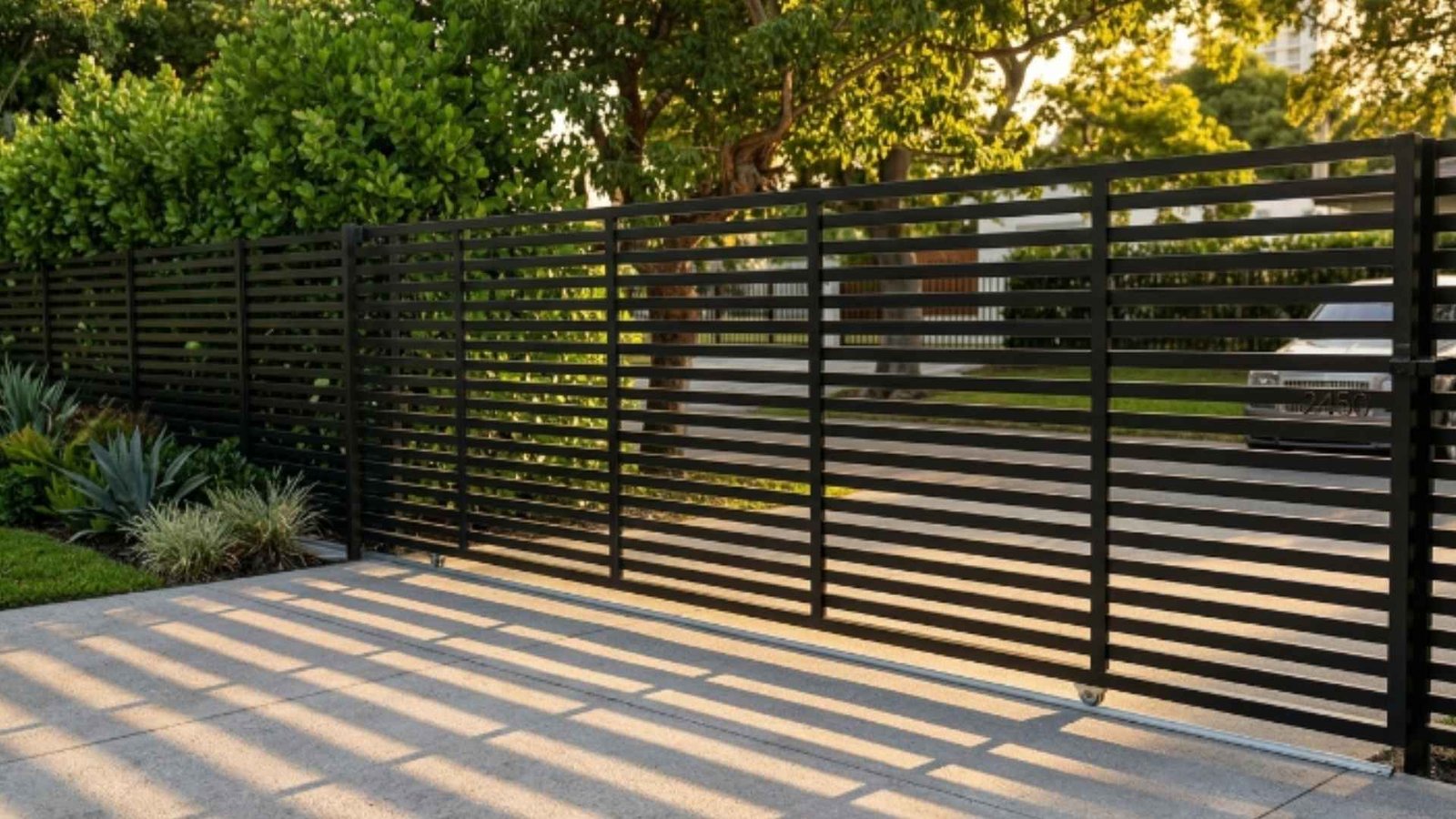


If you manage a condominium, serve on an HOA board, or own a unit in a governed community, adding or replacing a fence is rarely a simple “pick a style and install it” decision. In Miami, fence projects often involve association approval, permit requirements, aesthetic standards, and responsibility questions about common elements or limited common elements. That is why many property managers and boards search for HOA fence Miami before moving forward.
In practical terms, most condo and HOA fence projects in Miami require you to answer three questions first: Who has authority to approve it, what documents are required, and what style is actually allowed? Miami-Dade says fences require permits before installation, and its fence-and-gate permit process requires items such as a building permit application, a pre-approved fence detail, a site plan, a survey, and supporting documents. At the association level, Florida law requires HOAs to apply architectural standards reasonably and equitably, while condominium law treats many fence changes as potential material alterations to common elements depending on the governing documents.
At Welding Master Miami, we’ve worked with boards, property managers, owners, and contractors across Miami and surrounding areas since 2004. We also provide 24/7 mobile welding for urgent fence, gate, and railing repairs, but for planned condo and HOA fence projects, the real key is getting the approval path right before fabrication begins.
Why Fence Projects in Condos and HOAs Take Longer Than Standard Residential Jobs
In a typical single-family property, the main issues are usually design, budget, and permit compliance. In a condo or HOA setting, there is another layer: community governance.
That usually means the project may need to satisfy:
- the declaration, bylaws, or architectural guidelines
- board or architectural review committee approval
- county or municipal permit requirements
- community appearance standards
- rules on common-element ownership and maintenance
For HOAs, Florida law says an association or architectural committee must reasonably and equitably apply and enforce the architectural and construction-improvement standards authorized by the declaration or published guidelines. That matters because fence applications should not be reviewed arbitrarily or inconsistently.
Start With the Governing Documents, Not the Fence Catalog
Before choosing metal type, finish, or height, a condo or HOA should review its governing documents.
That usually includes:
- the declaration
- bylaws
- architectural guidelines
- any published fence or exterior-modification standards
- maintenance-responsibility provisions
This matters because in condo and HOA communities, the legal question is often not “Can this fence be built?” but “Who has the right to approve it, and under what standard?”
For HOAs, Chapter 720 ties architectural review authority to the declaration and published standards. For condominiums, Chapter 718 says there may not be a material alteration or substantial addition to common elements unless approved in the manner provided in the declaration, and if the declaration does not specify a procedure in certain multicondominium situations, approval by 75 percent of the total voting interests of each affected condominium may be required.
HOA vs. Condominium: Why the Approval Process Is Not Always the Same
Many people use “HOA” as a general term, but the legal structure matters.
In an HOA community
Fence requests are often reviewed through the board or an architectural review committee. Florida’s HOA statute requires architectural standards to be applied reasonably and equitably, and exterior changes are usually governed by the declaration and published design guidelines.
In a condominium
The bigger question is often whether the proposed fence affects common elements, limited common elements, or association property. Florida condominium law says there cannot be a material alteration or substantial addition to common elements except as approved in the manner set out in the declaration.
That distinction is critical because a fence around a patio, pool, common area, or perimeter line may not be treated the same way as an owner-installed partition in a private-use area.
Common Elements and Limited Common Elements: The Approval Trap Many Communities Miss
In condominium communities, fence projects often get delayed because boards or owners assume the location determines ownership. It often does not. The declaration controls.
Florida condominium guidance makes clear that limited common elements are still common elements, even if they are reserved for the use of certain units only. Commentary from Florida condo law practitioners also notes that maintenance responsibility for limited common elements depends heavily on the declaration, and if the declaration is silent, responsibility may remain with the association as a common expense.
That means before ordering a fence, the association should confirm:
- whether the fence will sit on common elements
- whether it affects limited common elements
- who pays for installation
- who maintains and repairs it
- whether owner approval, board approval, or both are required
Miami-Dade Permit Rules Still Apply Even If the HOA Approves the Project
Association approval is not the same as permit approval.
Miami-Dade states that fences require permits prior to installation, and its fence-and-gate permit page lists required submission materials including the building permit application, pre-approved county fence detail, site plan, survey, and other supporting documents. The county also provides a fence-permit addendum addressing issues such as rights-of-way, utility easements, fence height adjustments, and the finished side of the fence.
Miami-Dade’s neighborhood compliance guidance also states that fence height cannot exceed six feet in most cases, though height and location rules can vary by code section and specific site conditions.
For condo and HOA boards, that means a proper approval process usually has two tracks:
- community approval
- government permit approval
Skipping either one creates risk.
The Aesthetic Standards That Usually Matter Most
In governed communities, the fence is not judged only on safety or price. It is usually judged on whether it fits the community’s architectural identity.
The most common review factors include:
- fence height
- color and finish
- material type
- transparency or openness
- alignment with neighboring fences
- “finished side” orientation
- compatibility with gates and surrounding structures
This is why many associations require owners to match existing community standards rather than choosing any off-the-shelf system. Florida HOA commentary also emphasizes that if a board or committee has authority to approve exterior alterations but the governing documents do not specifically define what is allowed, the association should still rely on objective guidelines to apply standards uniformly.
A Practical Case Study: Why Fence Approval Can Stall
A common Miami scenario looks like this:
A condo board wants to replace an aging perimeter fence with a more modern black aluminum system. The design is attractive, the vendor is ready, and the budget is approved. Then the project stalls because:
- the declaration is unclear on whether the perimeter line is a common element
- the board has not confirmed the voting threshold for a material alteration
- the community has no written architectural standard for the new finish
- the permit package is incomplete
- a portion of the fence line may affect an easement or right-of-way
This is not unusual. Miami-Dade’s own permit materials show how fence projects can trigger extra forms and location-based requirements, while Florida condo law makes clear that common-element alterations must follow the approval method in the declaration.
The lesson is simple: the best fence projects move fastest when legal authority, aesthetics, and permitting are aligned before fabrication starts.
Best Fence Options for Condos and HOAs in Miami
For most condo and HOA communities, the best fence choice is usually the one that balances appearance, durability, and low maintenance.
Aluminum fences
These are often attractive for governed communities because they are cleaner-looking, lower-maintenance, and easier to standardize visually across multiple buildings or phases.
Steel fences
Steel can be a strong option for perimeter security, custom entry conditions, or heavier-duty commercial-style applications, but it usually requires more attention to coating quality and corrosion protection in Miami’s climate.
Custom welded metal fences
These make sense when the association wants:
- a unified custom appearance
- stronger perimeter control
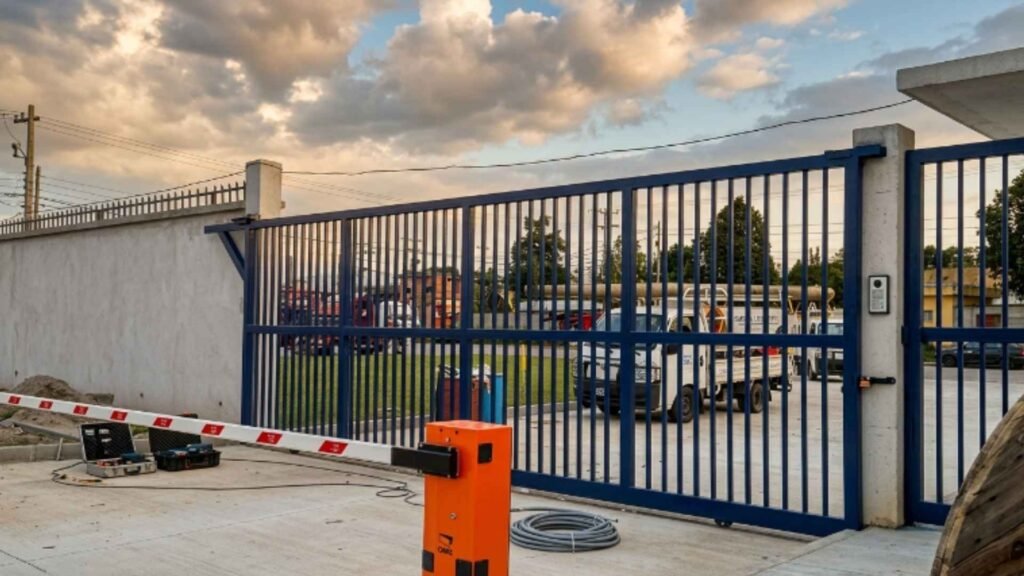
- integrated gates
- a higher-end design standard
For many communities, custom metalwork becomes especially useful when the property needs the fence to match railings, entry gates, pool barriers, or other architectural metal features.
How to Get HOA and Condo Fence Approval Faster
The easiest way to avoid delays is to treat the project as an approval workflow, not just a construction purchase.
A smoother process usually includes:
- reviewing the declaration and guidelines first
- confirming whether the area is a common or limited common element
- identifying the approval authority and vote threshold
- preparing a consistent design package
- confirming permit requirements early
- using drawings and finish samples the board can evaluate clearly
This matters because once a project enters the board-review process without clear documentation, delays usually grow.
Benefits of a Well-Planned Condo Fence Project
When the project is handled correctly, the community gets more than a new boundary line.
Benefits include:
- better appearance and curb appeal
- stronger perimeter definition
- lower approval conflict
- fewer owner disputes
- better permit compliance
- longer service life with the right material selection
For boards and managers, a properly planned project also reduces the risk of rework, denied permits, and arguments over maintenance responsibility later.
Why Choose Welding Master Miami
At Welding Master Miami, we understand that condo and HOA fence projects are not just about metal fabrication. They are about approvals, consistency, aesthetics, and long-term performance in South Florida conditions.
Why communities work with us:
- Serving Miami since 2004
- 24/7 mobile welding available
- experience with residential and commercial welding
- custom work for fences, gates, railings, and metal structures
- practical understanding of Miami permitting conditions
- solutions that balance community aesthetics and durability
Whether the project involves a perimeter fence, a gated common area, or a coordinated metal upgrade across a condo property, the goal is the same: build something that looks right, performs well, and gets approved the right way.
FAQ
Do condo and HOA fences need approval in Miami?
Usually, yes. In governed communities, fence changes often require board or architectural-review approval under the declaration and published standards. Separately, Miami-Dade says fences require permits before installation, so association approval does not replace permit approval.
Does Miami-Dade require a permit for a fence?
Yes. Miami-Dade says fences require permits prior to installation, and its permit process requires items such as a building permit application, site plan, survey, pre-approved fence detail, and supporting documents.
What if the fence is on condominium common elements?
Then the project may be treated as a material alteration or substantial addition under Chapter 718, which means the approval process must follow the declaration. In some cases, if the declaration does not specify a procedure, a high owner-vote threshold may apply.
What is the difference between common elements and limited common elements?
Limited common elements are still common elements, but they are reserved for the use of certain unit owners only. Responsibility for maintenance and approval usually depends on the declaration, which is why boards should confirm ownership and maintenance rules before approving a fence.
How tall can a fence be in Miami-Dade?
Miami-Dade says fence height cannot exceed six feet in most cases, though exact limits can depend on code section, location, and any approved adjustments.
Can an HOA deny a fence request for aesthetic reasons?
Yes, if the association has valid architectural authority in the governing documents and applies its standards reasonably, equitably, and consistently. Florida HOA law specifically requires architectural standards to be applied reasonably and equitably.
Get the Fence Approved Before the Project Gets Expensive
If your condo or HOA is planning a fence project in Miami, the smartest move is to line up the approval path before ordering materials or starting fabrication. The right design is only part of the job. The rest is making sure the community standards, permit requirements, and ownership rules all support the project.
Welding Master Miami helps boards, managers, and owners move fence projects forward with practical metalwork solutions built for South Florida communities.
Request a Quote for Your Condo: https://weldingmastermiami.co/en/contact