
For general contractors in South Florida, metal fabrication is rarely just another trade package. It often affects schedule, inspections, structural coordination, field sequencing, and safety-critical details across the jobsite. That is why many teams searching for commercial construction metal fabrication Miami are not only looking for a vendor. They are looking for a fabrication partner who understands how commercial work moves in the real world.
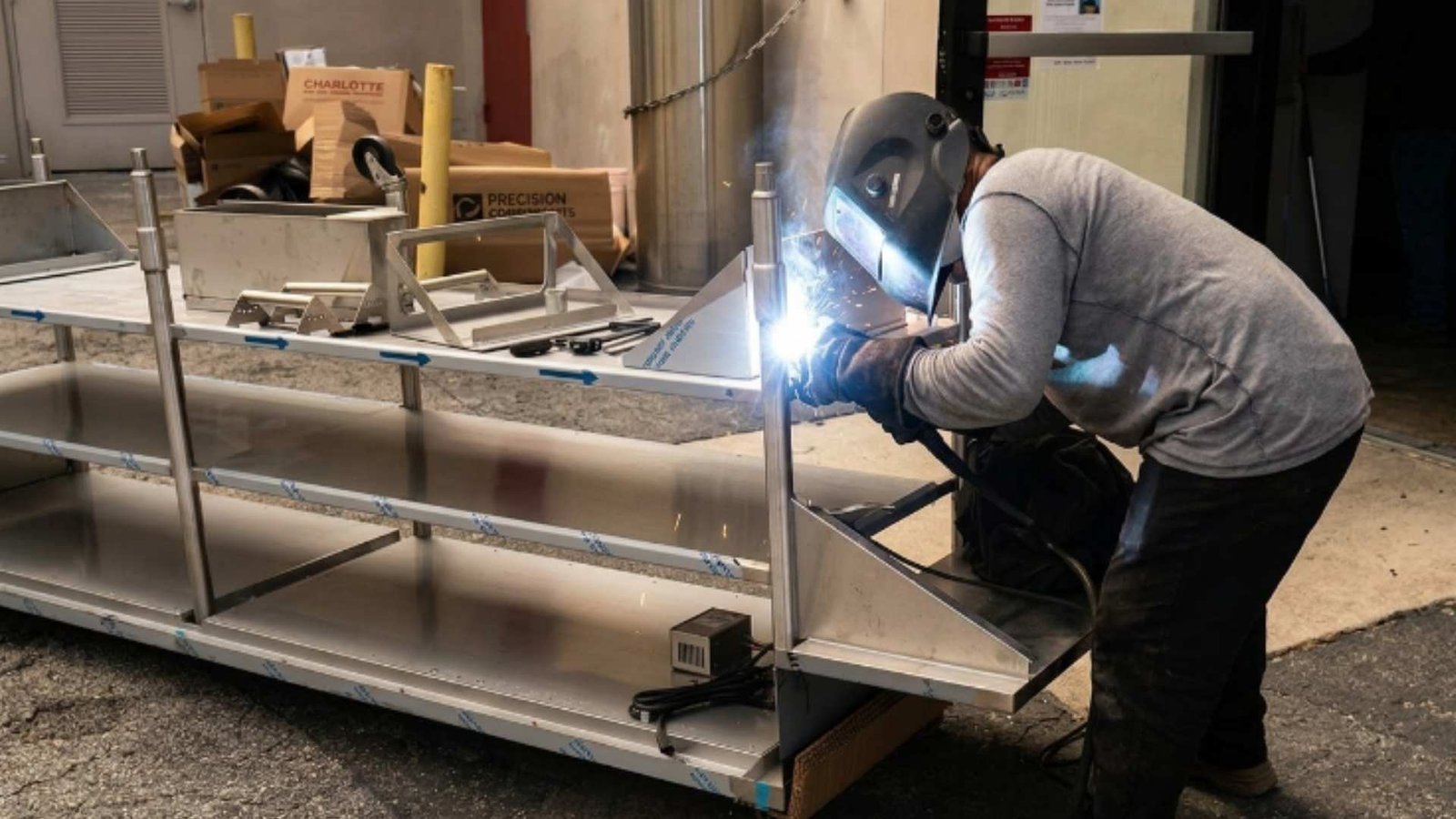
In Miami, commercial metal fabrication commonly includes structural steel components, stairs, railings, platforms, loading gates, miscellaneous metals, support frames, and field-installed welded assemblies. On many projects, the real challenge is not only fabrication quality. It is also shop drawing accuracy, fit-up in the field, coordination with concrete and structural trades, and making sure welding qualifications and documentation align with project requirements.
At Welding Master Miami, we support contractors, developers, and project teams across Miami and surrounding areas, with experience dating back to 2004 and 24/7 mobile welding available for urgent field conditions and active-site needs. In commercial construction, that combination matters because delays in metalwork often affect multiple trades at once.
What Commercial Metal Fabrication Usually Includes
Commercial metal fabrication in Miami can cover a wide range of scopes, depending on the project type and phase of work.
Common scopes include:
- Structural steel support components
- Metal stairs and landings
- Guardrails and handrails
- Equipment platforms
- Mezzanine components
- Loading gates and service barriers
- Roof access ladders and framed supports
- Bollard frames, protective barriers, and site metalwork
- Miscellaneous metals for tenant improvements and shell work
For contractors, these packages often sit at the intersection of structure, life safety, access, and finish work. A stair is not just a stair. It may involve structural attachments, railing code requirements, sequencing with slab finishes, and late-stage site coordination. A loading gate is not just an opening. It may affect circulation, security, delivery flow, and operations turnover.
That is why a good fabrication partner should understand the difference between:
- shop fabrication and field fit-up
- structural and non-structural scope
- finish-sensitive and utility-grade work
- permanent installations and temporary field solutions
Why Metal Fabrication Matters So Much on Commercial Jobs
On a commercial project, fabricated metalwork often touches the schedule in ways owners do not immediately see.
It can affect:
- permit and submittal timelines
- structural coordination
- stair and egress completion
- punch-list closeout
- tenant access
- safety compliance
- inspections and turnover
A delayed platform, stair, or gate can hold up multiple downstream scopes. A field mismatch can create rework. An unqualified weld procedure can create documentation problems. For contractors, that is why metal fabrication needs to be treated as a coordination trade, not just a material order.
Structural Steel and Support Fabrication
One of the most important categories in commercial fabrication is structural steel-related work. Even when the main steel package is awarded separately, contractors often still need fabricated steel supports, framed penetrations, connection pieces, stair support steel, canopy steel, or field-installed modifications.
These scopes may include:
- welded support frames
- connection steel
- supplemental steel for equipment
- steel for rooftop units or access systems
- infill framing
- reinforcement of existing steel conditions
For this kind of work, the main issue is not just whether it can be welded. It is whether the work is shown on approved plans, coordinated with the engineer of record, and executed under the right welding procedures and qualifications.
On commercial jobs, once steel becomes load-bearing or part of the engineered structure, documentation and inspection usually become more important than the fabrication itself.
Metal Stairs for Commercial Buildings
Metal stairs are one of the most common commercial fabrication scopes in Miami because they show up in so many project types:
- warehouses
- mixed-use buildings
- multifamily developments
- offices
- retail service areas
- parking and service access points
- rooftop access systems
A commercial stair package often includes:
- stringers
- landings
- tread systems
- guardrails
- handrails
- base plates and anchors
- connection details to the structure
For general contractors, stair fabrication usually needs early coordination because it affects life safety, inspections, and project closeout. It also has to align with structural dimensions, floor elevations, finish thicknesses, and code-related railing geometry.
In many projects, stairs are one of the last highly visible scopes to be installed and one of the first items inspectors and owners notice when they are wrong.
Platforms, Catwalks, and Access Structures
Commercial and industrial-style projects in Miami often require fabricated metal platforms, access decks, service walkways, and support structures.
These are common in:
- equipment yards
- mechanical areas
- rooftop access zones
- storage and warehouse operations
- industrial facilities
- utility and maintenance spaces
These assemblies may appear simple, but they often involve:
- structural support coordination
- clear loading assumptions
- railing and toe-board requirements
- anchor and base detail review
- field welding and adjustment
For contractors, the risk is usually in underestimating the amount of detailing and field verification required. Platforms often have to fit around existing equipment, pipe runs, conduits, drains, and access clearances. That means shop drawings and site measurements matter just as much as fabrication skill.
Loading Gates and Commercial Access Metalwork
Loading gates, service barriers, and commercial access metalwork are another major category in Miami commercial construction.
Typical scopes include:
- loading-area gates
- security swing gates
- service yard enclosures
- equipment protection barriers
- warehouse access gates
- metal partitions and guard systems
These assemblies matter because they affect both operations and liability. If a loading gate is misaligned, underbuilt, or poorly anchored, the problem becomes operational immediately. If a railing or barrier in a service area fails, it becomes a safety issue.
This is one reason contractors usually benefit from a fabricator who can handle both:
- custom shop fabrication
- field correction and emergency on-site welding
That flexibility becomes especially valuable on phased jobs and active facilities where perfect conditions rarely exist.
AWS Qualifications and Why They Matter
For commercial construction, one of the most important trust signals is whether the welding team can support the project’s qualification and documentation requirements.
In practical terms, contractors should ask about:
- welder qualifications
- applicable welding codes
- procedure qualification where required
- inspection coordination
- field documentation
- experience with structural and miscellaneous metals
On many commercial projects, AWS-based requirements are written directly into the structural notes, specifications, or delegated-submittal requirements. For structural steel work, teams commonly reference AWS D1.1 or other applicable welding standards depending on the material and scope. For fabricated and field-installed assemblies, the key issue is not only having good welders but having welders qualified for the type of work required by the project documents.
This matters most when the scope includes:
- structural connections
- engineered supports
- stair framing
- platform steel
- steel modifications in active buildings
- load-bearing attachments
For general contractors, the takeaway is simple: if the package includes code-sensitive or engineered metalwork, qualification should be discussed before fabrication starts, not after an inspector asks for records.
Shop Drawings, Field Dimensions, and Coordination
A large share of metalwork problems on commercial jobs come from coordination gaps, not bad welding.
The most common causes of delay include:
- incomplete field measurements
- conflicts with other trades
- missing embed or anchor details
- slab or wall conditions that vary from plans
- late design changes
- uncoordinated stair and railing dimensions
- site access limitations during installation
That is why commercial fabrication should always be tied to a clear pre-installation process.
A strong fabrication workflow usually includes:
- Scope review
- Site verification when needed
- Shop drawing development
- GC and design-team coordination
- Fabrication
- Delivery sequencing
- Field installation or welding
- Punch and closeout support
For contractors, this kind of process reduces the chances of field improvisation, which is where schedule and inspection trouble usually starts.
Why Miami Conditions Add Another Layer
Commercial metalwork in Miami has to perform in a climate that is hard on exterior steel and exposed assemblies.
That means contractors need to think about:
- corrosion resistance
- coating quality
- galvanizing or protective finish strategy
- drainage around metal bases
- coastal exposure
- long-term maintenance expectations
This is especially important for:
- exterior stairs
- loading gates
- rooftop steel
- parking-area barriers
- exposed railings
- site fencing and access structures
A commercial fabrication package that looks fine on paper can underperform quickly if the finish system is not appropriate for South Florida conditions.
What General Contractors Should Look for in a Metal Fabrication Partner
For a GC, a good metal fabricator should bring more than welders and shop capacity.
The right partner should be able to help with:
- submittal-ready shop drawings
- field verification
- realistic lead times
- structural and miscellaneous metals scope
- commercial stair and railing coordination
- AWS-aware qualification discussions
- emergency field support when conditions change
- schedule-conscious installation planning
That is especially important on active commercial sites where access, occupancy, and sequencing can change fast.
Why Choose Welding Master Miami
At Welding Master Miami, we understand that commercial construction metalwork is not just a fabrication task. It is a coordination scope that affects schedule, safety, inspections, and turnover.
Why contractors work with us:
- Serving Miami since 2004
- 24/7 mobile welding available
- Experience with residential and commercial welding
- Fabrication for stairs, railings, gates, platforms, and structural metal components
- Practical field support for active jobsites
- Local understanding of Miami conditions, coordination challenges, and project pacing
Whether the scope involves structural support steel, stairs, loading gates, railings, or miscellaneous commercial metalwork, our goal is to help contractors keep the package buildable, compliant, and on schedule.
FAQ
What does commercial metal fabrication include in Miami?
It often includes structural steel components, stairs, railings, platforms, loading gates, support frames, and miscellaneous metals for commercial buildings. The exact scope depends on whether the project is new construction, a build-out, a renovation, or an occupied-facility upgrade.
Do commercial fabrication jobs require AWS-qualified welders?
Many do, especially when the work involves structural steel, engineered connections, or specification-driven welding requirements. The exact qualification standard depends on the project documents, material, and scope, so contractors should confirm this early in preconstruction.
What is the difference between structural steel and miscellaneous metals?
Structural steel typically refers to load-bearing or engineered steel elements that are part of the building structure. Miscellaneous metals usually include items like stairs, railings, ladders, platforms, frames, and other fabricated assemblies that may still be code-sensitive even if they are not primary structural members.
Why are metal stairs and platforms common in commercial construction?
Because they are durable, efficient, and adaptable for service access, egress, rooftops, equipment zones, warehouses, and multifamily or mixed-use buildings. They also allow more custom fabrication than many off-the-shelf systems.
Why is field coordination so important in metal fabrication?
Because many commercial metal assemblies must fit exact site conditions, existing anchors, slab elevations, wall locations, or other trades’ installations. Even a well-fabricated piece can cause delays if the dimensions, attachments, or sequencing are not coordinated properly.
What should a general contractor ask a metal fabricator before award?
Ask about scope experience, shop drawing process, field measurement workflow, lead times, welding qualifications, installation support, coating options, and how they handle site changes or urgent field conditions.
Keep the Metal Package Moving Without Slowing the Job
If your project includes stairs, platforms, loading gates, structural supports, or miscellaneous commercial metalwork, the right fabrication partner can help you avoid delays, reduce rework, and keep coordination tighter from submittals through installation.
Welding Master Miami supports contractors and commercial teams with practical fabrication and field-ready welding services across Miami and surrounding areas.
Become Our Partner Contractor — Call Us: https://weldingmastermiami.co/en/contact/